From Canada to the Pacific Northwest
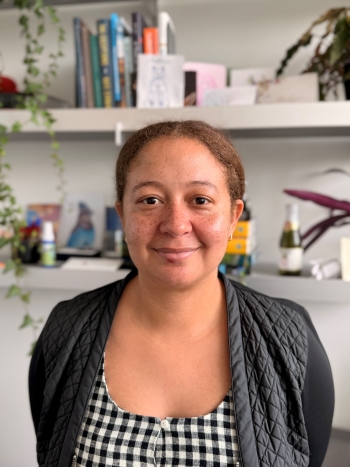
When Elissa Khodikian left Canada to pursue graduate studies at the University of Washington, she wasn’t just looking for a new place to study. She was looking for the right environment to continue asking the questions that had already begun shaping her academic path. Originally from Lebanon, she later moved to Canada, where she completed both her undergraduate and master’s studies. It was during that time that she developed a strong interest in how species evolve to adapt to changes in their environment.
During her studies in Canada, Elissa met Dr. Andrea Durant, whose research aligned closely with her own growing interests. That connection became a key part of her decision to come to UW. “What brought me to UW was the research that’s going on here. I was really interested in the research program at the Department of Biology with Dr. Andrea Durant,” she explains. Continuing her work under Dr. Durant’s mentorship gave Elissa the opportunity to deepen the research questions she had already begun exploring while joining a lab environment where those ideas could grow further.
What brought me to UW was the research that's going on here.
Being surrounded by the coastal ecosystems, wetlands, and urban landscapes of the Pacific Northwest has given her direct access to the systems she studies connecting theory with hands-on research in a meaningful way. Over time, that connection has only deepened. “I think I’ve just grown to really love my project more and more as I’ve been here,” she says.
Studying Adaptation in Saline Environments
At the center of Elissa’s work is a fascinating question: how do some mosquitoes adapt to environments that would typically be inhospitable to them?
She studies saline-tolerant mosquito larvae which are part of a small group of species capable of surviving in seawater and brackish habitats. While most mosquito species rely on freshwater, these larvae can drink saltwater, retain the water they need, and excrete excess salt. Elissa’s research focuses on understanding how they do this, including a relatively-recently-evolved specialized gland that appears to help move salt out of the body.
“In terms of an evolutionary perspective, saline tolerance is becoming more common,” she explains. “It’s important to understand this mechanism and how to mitigate mosquitoes in coastal areas.”
Her research often means closely observing how saline moves across the mosquito’s tissues and organs tracking how ions are transported and expelled at the cellular level. That work involves long hours at the microscope, where she examines tiny structures that can only be seen under magnification, along with designing experiments to test how those organs function in different conditions.
Some of the work draws on methods from decades-old scientific literature. Dr. Durant describes the process as highly experimental: old studies sometimes involved tying off organs in mosquito larvae with microscopic threads to understand how they worked. What stands out, she says, is Elissa’s willingness to take these ideas and try them herself.
“Usually by the end of the week, Elissa is like, ‘Okay, so I’ve tried actually doing this and it seems to work and this is the result and I was able to repeat it,’” Dr. Durant says.
That combination of detailed observation and hands-on care is a defining part of her work. In addition to experiments, Elissa maintains a colony of Aedes togoi mosquitoes in UW’s insectary. The species is sensitive to even small disruptions in light, temperature, or feeding cycles, meaning much of her work depends on carefully sustaining the colony before any experiment can begin.
Her perspective on mosquitoes challenges common assumptions:
“I like to say that I love mosquitoes. Despite being a nuisance to most people and a major cause of illness and death, which is attributed to only a small fraction of species, they’re really important for biodiversity.”
That curiosity keeps the work engaging. “Every time I find something out, it ends up being novel and there are more questions I want to answer,” she says. Each finding is less an endpoint than a starting point revealing how much there is still to uncover.
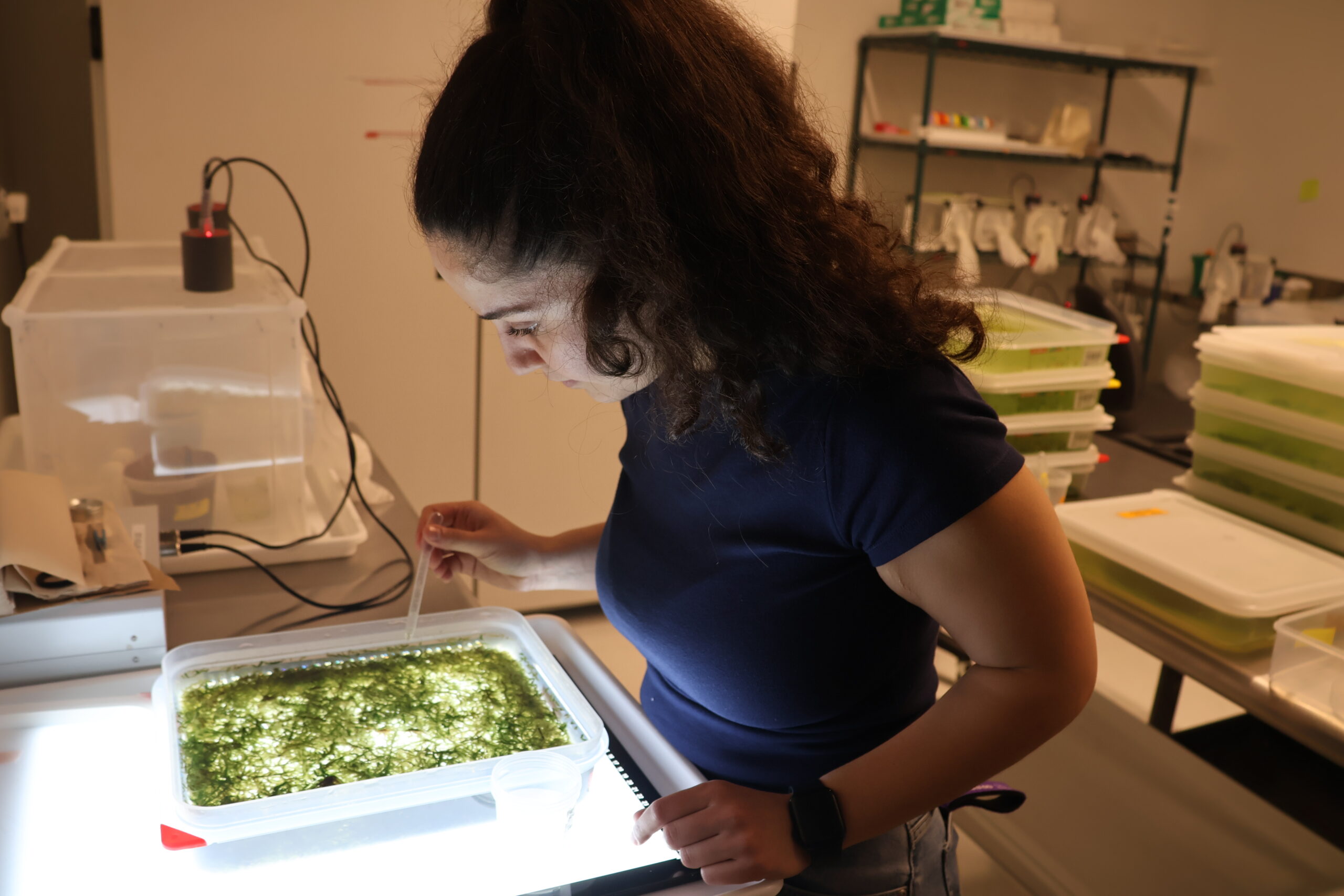
Elissa nurtures a mosquito colony for use in her research on adaptation in saline environments.
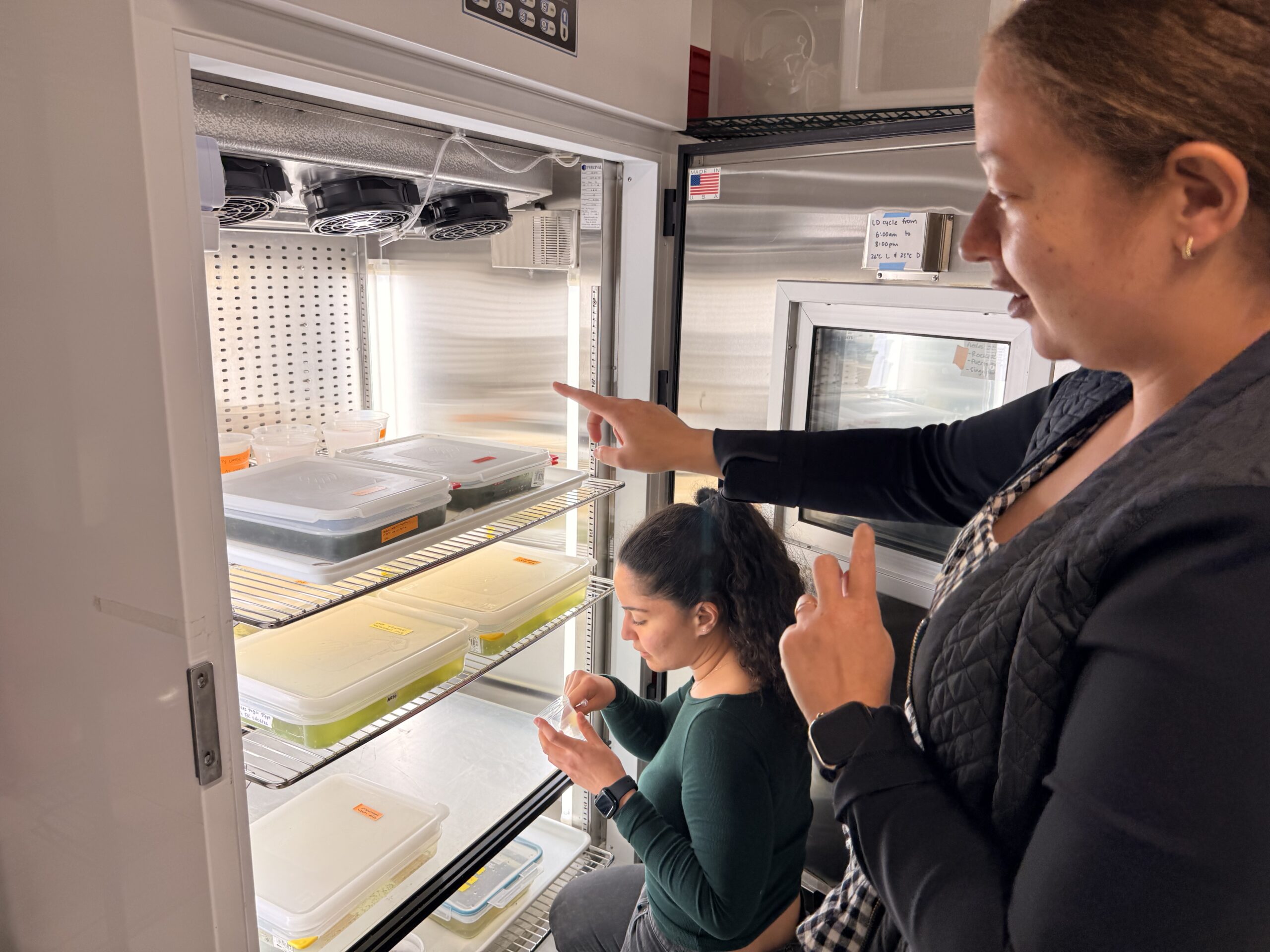
Growing a mosquito colony requires control over many factors including temperature and light.
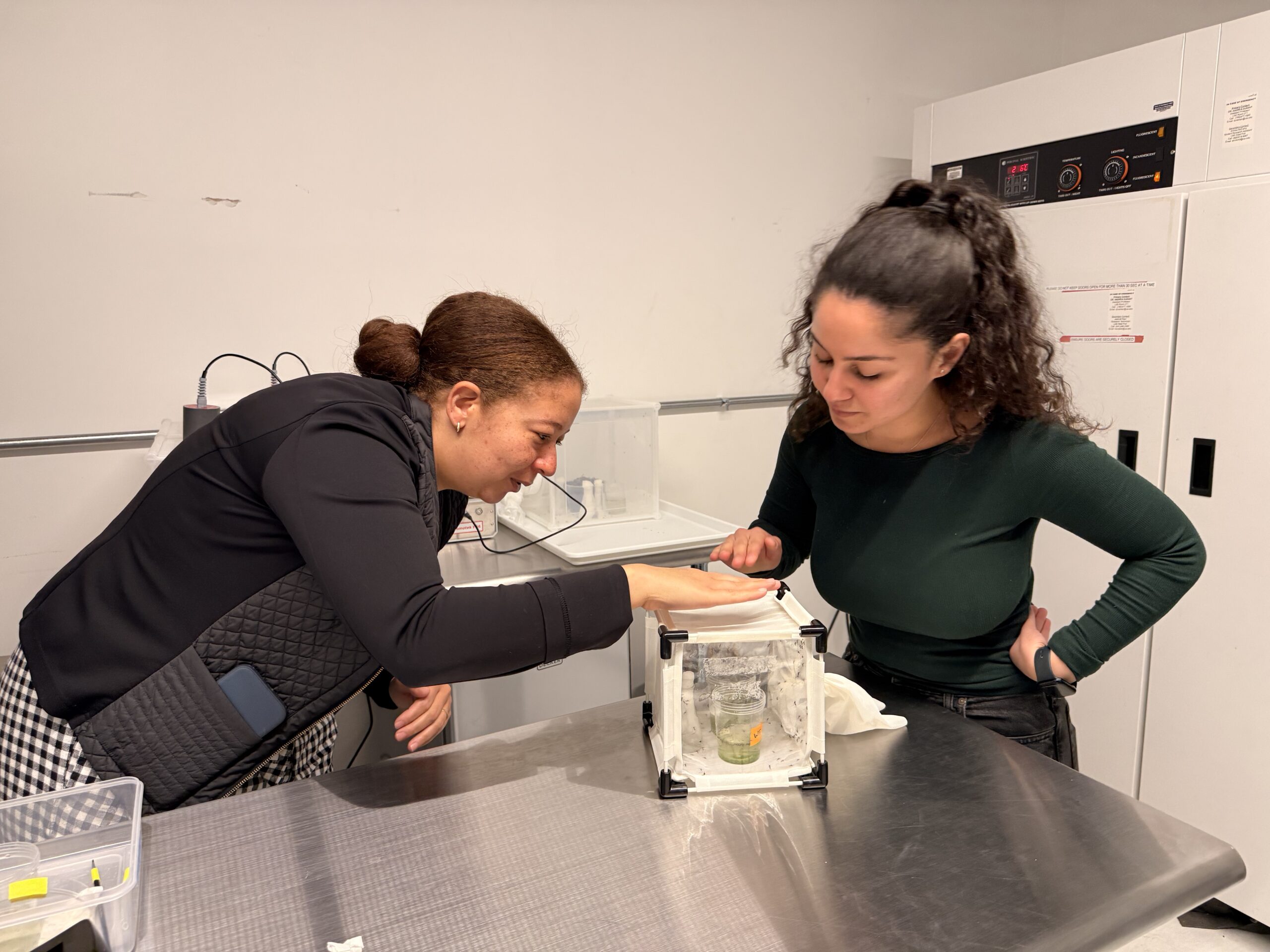
Elissa Khodikian and Dr. Andrea Durant demonstrate mosquito feeding habits.
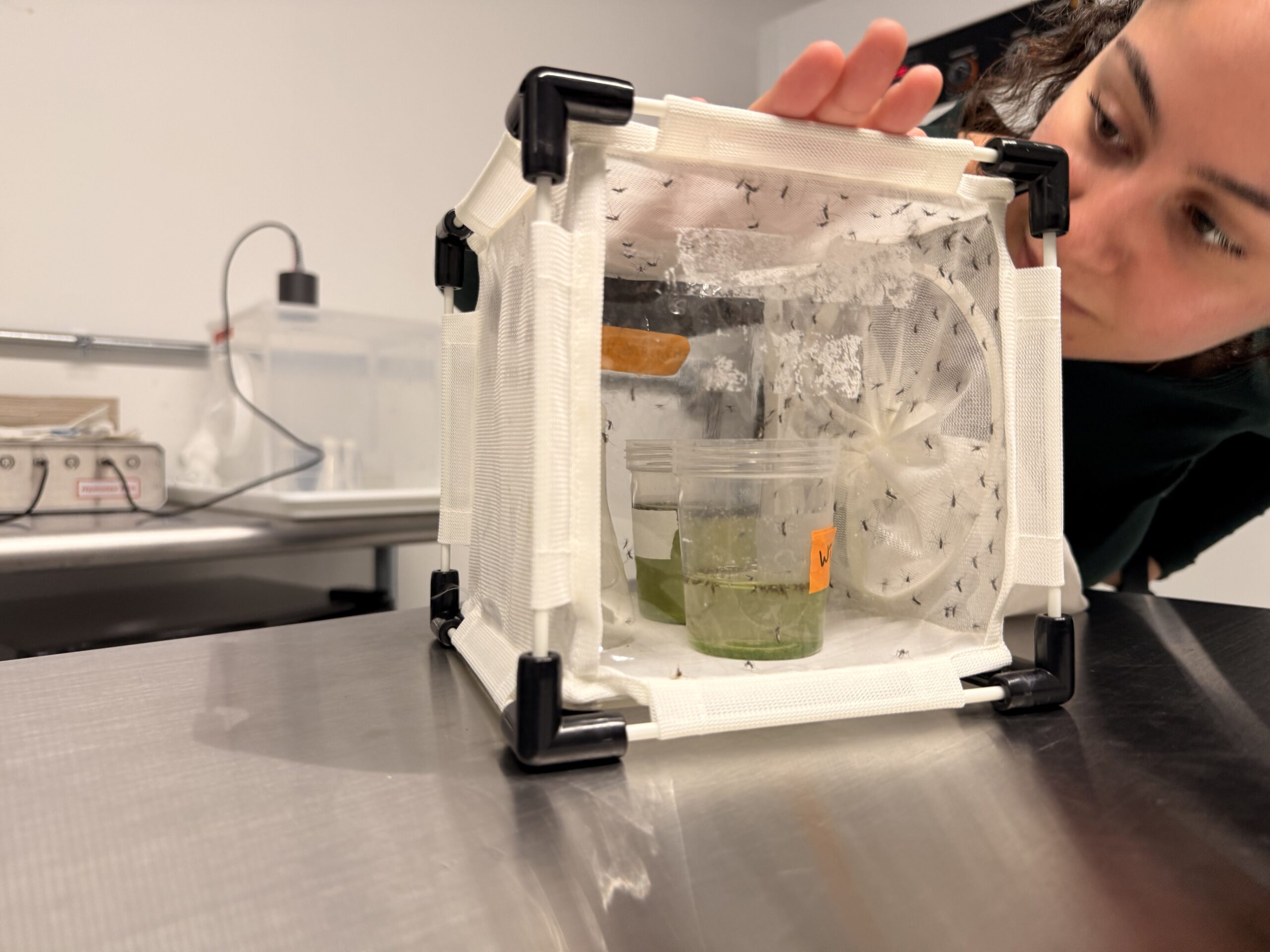
Elissa Khodikian observes some of her mosquito colony that show little interest towards her hovering hand since this species does not typically seek out humans to blood feed.
The Importance of Mentorship
Mentorship has been a central part of Elissa’s experience at UW not only in shaping her research, but also in shaping how she understands academic community.
She credits Dr. Durant with creating an environment where questions are encouraged and ideas can move in multiple directions. “It’s really nice to have someone in your corner that’s supporting you and that you can trust to bring questions,” Elissa says.
That relationship is built on a shared understanding of mentorship as collaborative rather than hierarchical. Dr. Durant describes the lab culture as a “parallel network,” where knowledge flows between people regardless of seniority. She notes that when they first worked together in Canada, Elissa was already bringing her own expertise of seawater chemistry and aquarium systems which influenced Dr. Durant’s work as much as Dr. Durant supported hers.
The approach to mentorship is very much a parallel network and not based off this hierarchy of seniority and position — really who is skilled and an expert in a certain area.
That same spirit shapes how Elissa mentors others. She works closely with an undergraduate researcher, Rin, guiding them through research methods, troubleshooting experiments, and helping develop applications for academic opportunities.
“It’s exciting to have someone just as excited as me about the research.”
Their collaboration has become an important part of the lab’s learning environment. Rin’s questions often prompt new ways of thinking, while Elissa’s guidance helps build confidence and direction. The process becomes collaborative, with both learning and growing through the experience. Dr. Durant notes that Elissa’s mentorship has directly shaped Rin’s development as a researcher, but just as importantly, it has strengthened the collaborative culture of the group.
“There’s open and routine communication thanks to Elissa’s experience with mentoring different types of people in the lab,” Dr. Durant says.
For Rin, that mentorship has been transformative. “Elissa’s been the best mentor I could ever have,” they say. “Anytime I have a question I’m never shot down.” Rin also credits Elissa with helping shape their academic direction by sharing advice drawn from her own undergraduate and graduate experiences.
My passion for research and my undergraduate journey would be very different without Elissa's mentorship.
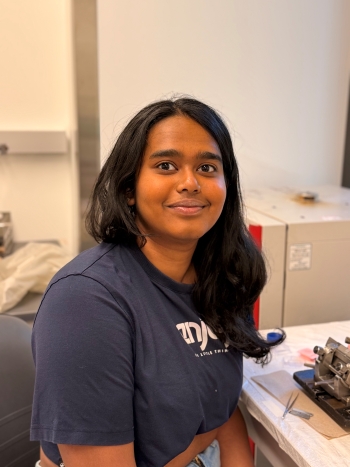
Their collaboration reflects the broader culture of the lab, where mentorship is built through curiosity, openness, and shared learning. Dr. Durant notes that Elissa’s approach has strengthened the lab community as a whole, creating an environment of “open and routine communication” across different levels of experience. Mentorship, for Elissa, isn’t just about teaching; it’s about engaging in the research process together.
Community, Reflection, and Looking Ahead
Beyond her research, Elissa has found a strong sense of community within her department and among her peers. From daily interactions in the lab to connections across the Life Sciences building, those relationships have shaped her experience in meaningful ways. Whether it’s troubleshooting experiments together, sharing ideas, or simply navigating the ups and downs of graduate school, that sense of shared experience has been an important part of her journey.
“When I think of UW, I think of the community that I have through my cohort and department.”
As she reflects on her time at UW, Elissa sees both her research and the relationships around it as shaping what comes next.
“I love so many aspects of what I’m doing,” she says. “It’s something I want to do long-term. UW has opened up that door for me.”
Looking ahead, she hopes to continue asking the same kinds of questions that first drew her to biology: how species adapt, evolve, and respond to environmental change. But just as important to her is the collaborative environment that makes those discoveries possible.
For Elissa, UW has been more than a place to conduct research. It has been a place to build scientific community through curiosity, mentorship, and the people who make discovery possible.